
What Is Retrogaming: Defining the Golden Eras of 8-Bit and 16-Bit Play
Retrogaming represents the preservation, study, and active play of vintage video game hardware and software, anchored primarily in the foundational generations spanning the late 1970s through the late 1990s. For players who lived through those formative years and newcomers discovering the catalog today, retrogaming is not merely an exercise in nostalgia; it is an appreciation of rigorous craft born from strict technical limitations. Game designers in the 8-bit and 16-bit eras could not rely on sprawling memory or cinematic cutscenes. Instead, they refined responsive mechanics, unforgettable chiptune melodies, and tightly balanced level design that communicated gameplay goals instantly.
Technically, these classic generations established aesthetic standards that still define retro preservation today. Standard CRT monitors rendered video in native 240p progressive signals, drawing bold sprite silhouettes across distinct scanlines with virtually zero input lag. Modern preservation bridges this tactile history through multiple paths, from running original cartridges on authentic systems to modern FPGA hardware recreations that simulate circuit behavior down to the clock cycle. Whether you preserve original circuit boards or configure cycle-accurate emulation environments, retrogaming celebrates the milestone era where the core vocabulary of interactive entertainment was written.
The 1980s Revolution: How Groundbreaking Consoles Rebuilt an Industry
Following the catastrophic commercial crash of 1983, many financial analysts declared the home video game console a dead consumer electronics fad. That narrative shattered when the Nintendo Entertainment System arrived on Western shelves in the mid-1980s, flanked by meticulous quality control and an iconic front-loading design built to resemble home audio equipment. By pairing tight hardware restrictions with brilliant engineering, Nintendo revitalized consumer confidence and gave rise to enduring masterclasses in platforming, exploration, and spatial puzzle-solving that transformed living rooms into interactive theaters.
The late 1980s proved that this creative resurgence was not a fluke but an unstoppable cultural revolution. Sega entered the ring with the Master System, showcasing sharp color palettes and arcade conversions, while Nintendo expanded portable play into an international phenomenon with the 1989 release of the Game Boy. These battery-efficient handhelds and home machines taught an entire generation of developers how to extract immense emotional resonance and addictive game loops from tiny microchips, setting the stage for the explosive technological rivalries that followed.
The 1990s Leap: 16-Bit Pixel Rivalries and the Dawn of 3D Worlds
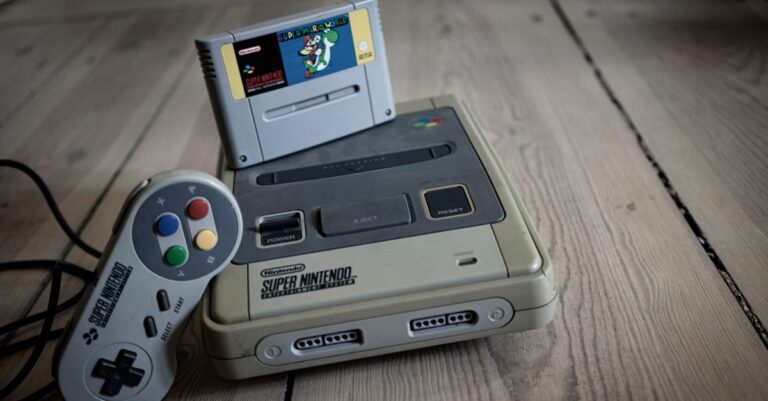
The arrival of the 1990s ignited the most fierce technological rivalry in gaming history, pitting the Sega Genesis against the Super Nintendo Entertainment System. Sega weaponized aggressive marketing and high-speed action, while Nintendo countered with expanded color palettes, specialized coprocessor chips, and intricate role-playing epics. Enthusiasts who experienced this era remember the distinct aesthetic leap: rich parallax scrolling, stereo synthesizer chips, and crystal-clear RGB video delivered to European television sets via SCART connections, elevating 16-bit pixel craft into an undisputed high art form.
Yet just as two-dimensional sprite artwork reached its zenith, the industry pivoted toward the horizon of real-time three-dimensional polygon rendering. The launch of CD-ROM platforms like the Sony PlayStation reshaped expectations overnight, introducing proprietary hardware BIOS routines, cinematic redbook audio, and uncharted spatial freedom. While early low-polygon worlds brought jagged geometry and evolving camera systems, they also introduced immersive storytelling and analog movement that forever closed the book on the 16-bit era, marking the final, unforgettable technological leap of twentieth-century gaming.
Displaying the Classics: From Pure 240p on CRT Monitors to Modern FPGA Hardware
Experiencing games from the golden era requires understanding how classic video output actually functioned. The overwhelming majority of consoles between the late 1970s and the late 1990s output a progressive 240p signal rather than standard interlaced video. Cathode Ray Tube displays rendered these 240 lines natively, carving out sharp horizontal scanlines with zero processing lag. In Europe, enthusiasts unlocked the definitive image quality by wiring systems like the Super Nintendo, Mega Drive, and original PlayStation through 21-pin RGB SCART connections, bypassing muddy composite video for rich, razor-sharp colors that defined living-room play.
Connecting those vintage systems straight into contemporary flat screens reveals how poorly modern digital panels interpret 240p signals, often treating them as 480i video and adding unbearable latency. Dedicated upscalers like the RetroTink bridge this generational gap by digitizing analog RGB and component feeds into high-definition resolutions without input lag. At the same time, the preservation community has embraced Field-Programmable Gate Array technology. Rather than running software emulation, FPGA devices like the MiSTer platform and the Analogue Pocket reconstruct retro consoles at the silicon level, running cycle-accurate logic gates that preserve every timing quirk of classic hardware.
Preserving the Cartridge Library: Flash Carts, Emulation Cores, and Smart Collecting
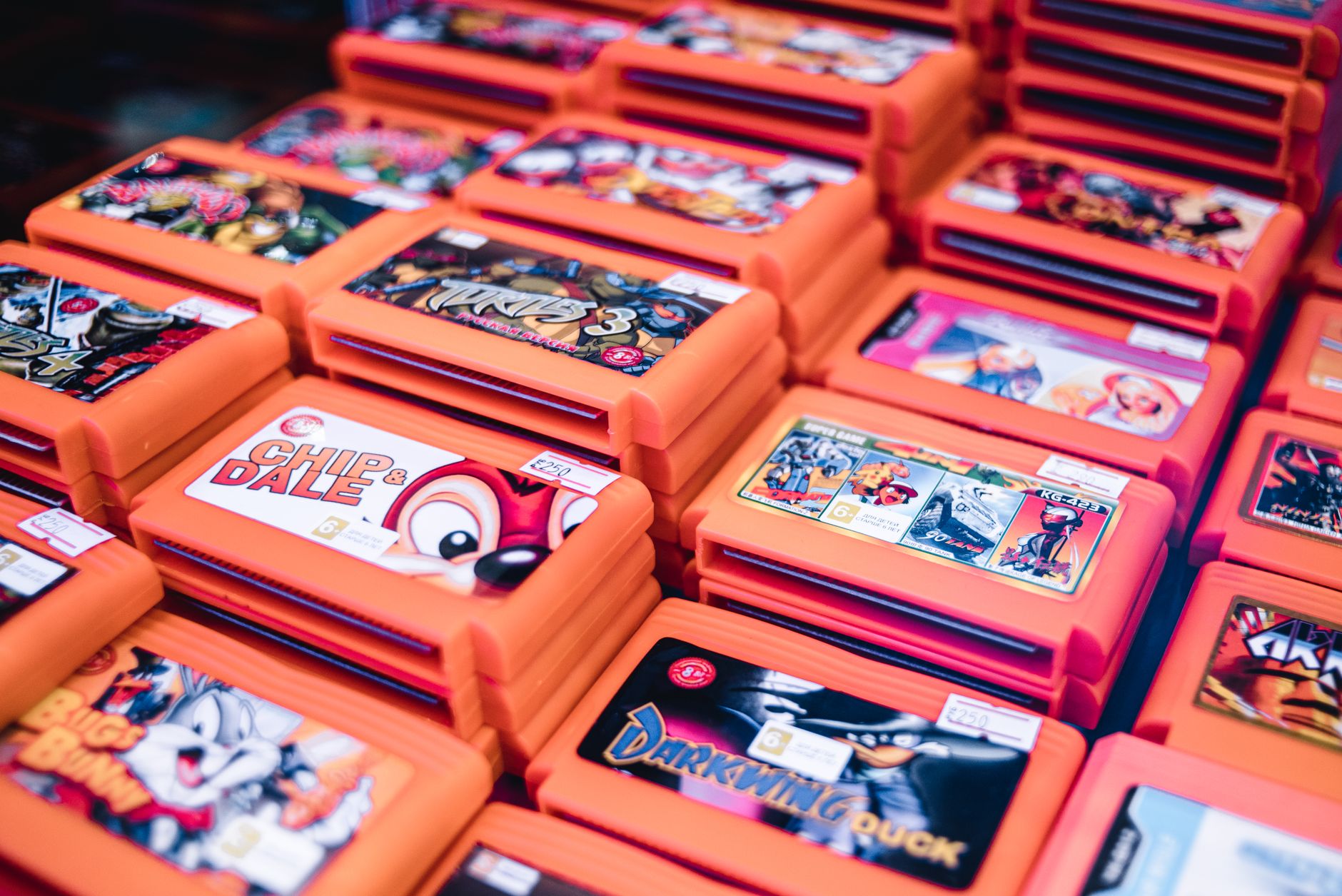
Preserving physical cartridges has evolved into a practical science for vintage gaming enthusiasts. Instead of wearing down fragile cartridge pins and aging circuit boards, players rely on flash carts to run verified game files on original hardware. Krikzz’s EverDrive family, spanning systems like the NES, Super Nintendo, Sega Genesis, Nintendo 64, and Game Boy, reads ROM files directly from microSD storage while accurately replicating mapper chips. These devices deliver modern conveniences like save states alongside original in-game battery saves, letting collectors archive their boxed originals safely on display shelves while enjoying authentic controller feedback.
For portable preservation and multi-platform access, open-source software like RetroArch serves as a central hub powered by modular libretro cores. A single setup can emulate dozens of microchip architectures while adding custom scanline shaders and netplay, though CD-based systems like the PlayStation and Sega CD still require legitimate BIOS dumps extracted directly from console firmware. Enthusiasts who prefer holding authentic plastic also give new life to original handhelds using modern IPS kits. Swapping a dim reflective Game Boy panel for a bright, backlit IPS replacement provides pristine portable visibility, merging twentieth-century industrial design with twenty-first-century display reliability.
Frequently Asked Questions About Classic Gaming and Hardware Preservation
What is the most authentic way to display 240p retro consoles on modern displays? The most authentic setup on modern televisions uses dedicated low-latency line doublers and upscalers such as the RetroTink. Retro consoles like the SNES and Mega Drive output native 240p video, which standard digital flat panels misinterpret as interlaced signals. By using high-quality RGB SCART or component cables routed through an upscaler, you preserve sharp scanlines, accurate colors, and zero perceptible input lag without maintaining a heavy CRT television.
How does FPGA hardware differ from software emulation in retro gaming? Software emulators like RetroArch translate vintage machine code through modern operating systems using modular libretro cores. In contrast, FPGA devices like the MiSTer and Analogue Pocket use reprogrammable microchips to physically replicate the original console circuitry at the clock-cycle level. This hardware simulation eliminates typical software latency and operating system overhead, delivering near-flawless timing accuracy at a higher hardware investment.
Why are flash carts preferred over original retail cartridges for everyday play? Flash carts such as the EverDrive line accept microSD cards containing archived ROM files, allowing original consoles to boot software as if an authentic game were inserted. This method protects rare physical cartridges from wear, battery failure, and board oxidation. Furthermore, advanced flash carts offer modern quality-of-life additions such as on-screen game selection menus, cheat code support, and real-time save states without altering the host console.