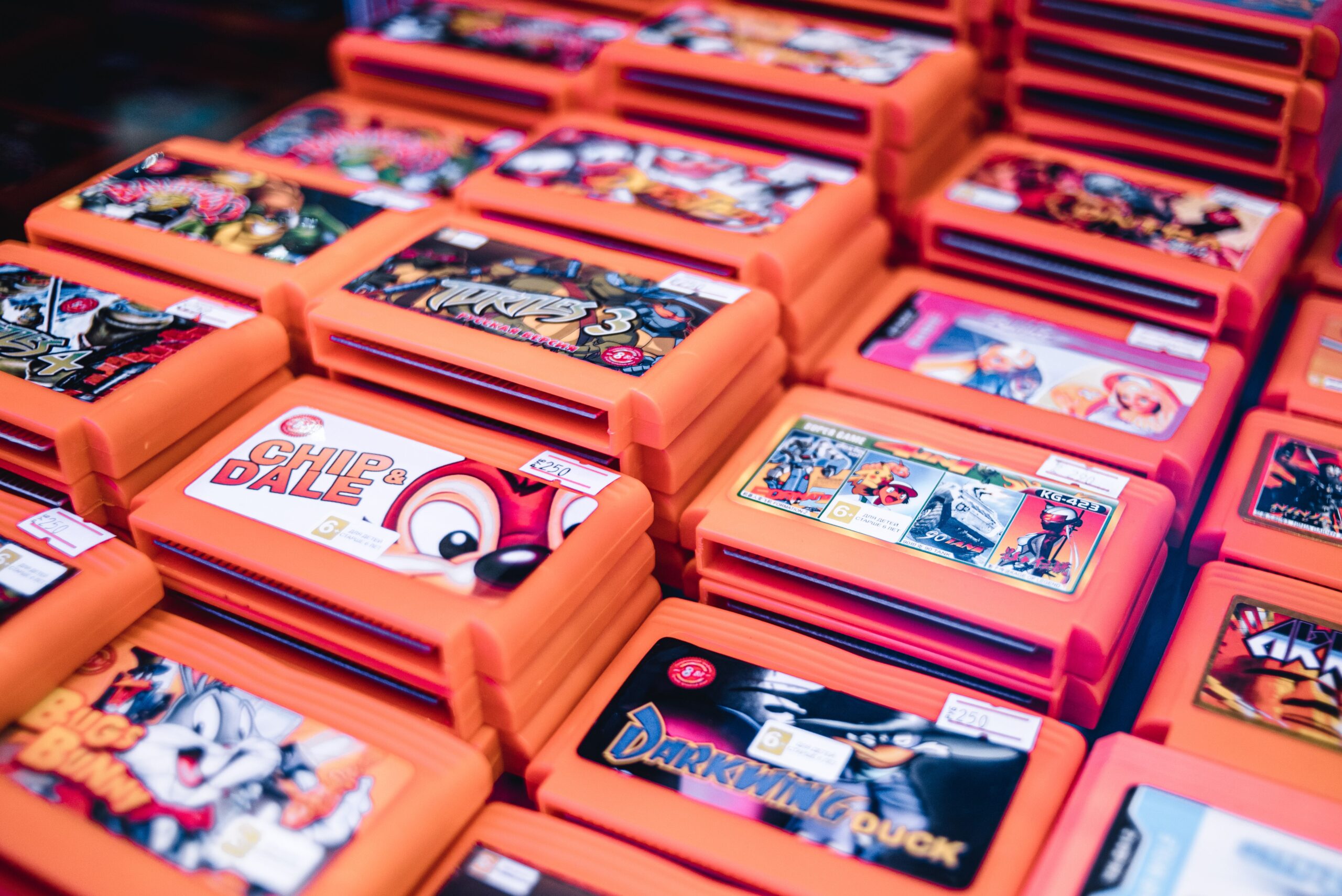

The best place to buy retro games is not a single store — it is a system. After fifteen years of buying, repairing and trading classic hardware, I keep one rule above all others: the best deal is usually the one that costs you patience, not money. You can pay a premium for convenience, or you can learn to find the same cartridge for a third of the price. This guide walks through every place where retro games actually change hands, from eBay auctions to dusty garage sales, and tells you exactly how to avoid the traps that separate smart collectors from people who simply overpaid.
Why Where You Buy Matters More Than What You Pay
The same cartridge can cost three completely different prices depending on where you buy it. I have seen a loose copy of a popular Game Boy game priced at eighty dollars in a specialist online shop and the identical cartridge sitting at thirty dollars on a flea market table the same weekend. The cartridge was the same; the seller was not. Understanding how each channel prices its stock is the single biggest advantage you can have as a buyer.
Here is the truth about the retro market: it is not a market at all. It is a dozen smaller markets with different sellers, different risk profiles and different price floors. Online auction sites favour sellers who can ship anywhere, which pushes prices up. Local sellers cannot reach a national audience, which pushes prices down. Specialist retailers charge a service fee for testing and guarantees. Scammers concentrate where the money is, which is exactly why the cheapest listing on a site is usually the one you should avoid.
So stop asking “where should I buy retro games” and start asking “what am I actually buying?” A cartridge for your own shelf, a gift, a complete-in-box item for a collection, or a broken console you plan to fix — each one has a different best source, and each one deserves a different budget. If you want the practical lowdown on which consoles are worth owning in the first place, our complete guide to retro gaming consoles covers the hardware side. This guide covers the money side: where to buy, what to pay and how not to get burned.
The Best Online Marketplaces for Retro Games
Online is where most retro games change hands today, and it is also where most of the traps live. Here are the channels that actually work, ranked by how honest they are with your wallet.
eBay — The Default Option, Used Correctly
eBay has the largest selection of retro games on the planet. Whatever you are looking for, from a five-dollar sports cart to a sealed copy of a grail title, someone is selling it. The trick is that eBay is not a store — it is an auction house where the market sets the price, and the market is full of people who will gladly pay too much.
Use eBay’s sold listings instead of the current ones. In the search filters, select “Sold items” and you will see what the game actually went for in the last few months, not what hopeful sellers are asking. That number is your real price anchor. Then check the seller’s feedback, read the description for the words “reproduction” or “repro”, and factor in shipping. A cheap cartridge with twenty dollars of shipping is not cheap. Buy-it-now listings on popular titles are usually priced above what the same game closes at auction, so if you are not in a hurry, let the auction end.
DKOldies and Specialist Retro Retailers
If you want the safest online experience, specialist retro retailers like DKOldies test, clean and refurbish every cartridge and console before shipping, and they back them with a warranty. That peace of mind costs money, and you should know that up front: you will typically pay twenty to forty percent more than the same loose cartridge on eBay.
That premium is not wasted. A refurbished console that has been recapped and tested is worth more than a “working” console from a stranger that arrives with a dead capacitor. If you are buying your first console, or buying a gift for someone who does not want to open a cart with a screwdriver, this is the honest recommendation. You are paying for the testing, not for the box.
Etsy — Curated Finds and Modded Hardware
Etsy started as a handmade marketplace, and a lot of what you will find there is fan-made: repro labels, custom shells and modded handhelds with new screens. That is fine, as long as you know that is what you are buying. Etsy also hosts genuine sellers who clean, test and list legitimate original cartridges with real photos.
The strength of Etsy is boxed games, complete-in-box items and region-specific rarities, because curated sellers photograph everything. The weakness is pricing: it is a boutique channel, so expect boutique prices. Treat Etsy as the place for a specific grail item, not for building a library.
Japan Import Sites — The Hidden Source of Mint Hardware
If you collect Game Boy, Famicom, Super Famicom or Nintendo 64, the best-condition examples in the world live in Japan. Japanese sellers grade condition strictly, the games were treated carefully, and the secondhand market there is enormous. Proxy services like Sendico, ZenMarket and Buyee let you bid on Japanese auctions (Yahoo! Auctions Japan, Mercari) and ship internationally.
You are paying in yen plus proxy fees and international shipping, so the per-game price only makes sense when you consolidate several purchases into one parcel. Two warnings: many Japanese cartridges are region-locked and the menus are in Japanese, and battery saves in old cartridges are almost certainly dead — plan to replace them. The savings on a mint handheld can be dramatic, but this channel rewards research and patience, not impulse.
Facebook Marketplace and Classifieds — Local Deals, Local Risks
Facebook Marketplace and sites like Craigslist are where the retail markup disappears. A seller cleaning out their attic does not care what PriceCharting says; they want the stuff gone. That is why the same game can be half the eBay price here, and why negotiation is expected.
The risks are real, so follow a short list: meet in a public place, test the console or cartridge before paying, bring your own batteries if you can, and walk away the moment a deal feels wrong. Stolen goods, fake consoles and “it worked last week” items all live on classifieds. They also hide genuine bargains and bulk lots — you can buy an entire box of games for the price of two individual eBay listings. When a listing is for a bundle of “untested” consoles, read the next section before you make an offer.
Local and Offline Options
The physical world still moves more retro games than most buyers assume, and it is where the honest deals hide. Here is how to work it.
Local Game Stores — Pay a Little, Get a Lot
Your local independent game store is the most underrated source in the hobby. The prices sit above classifieds and below specialist retailers, and you get something no website offers: the chance to hold the cartridge, check the label and talk to someone who probably tested it. Most stores also run trade-in programs, so you can trade duplicates toward the game you actually want.
Build a relationship with the staff. When a rare cart comes in, regulars hear about it first. Stores also tend to price common games very fairly because they want turnover, which makes them the best place to fill out a library cheaply. If you are new to the hobby, start here before you touch an auction site.
Retro Conventions and Swap Meets
Retro gaming conventions are the best place to see the full breadth of the market in one room. Vendors from across the country bring their best stock, which means serious selection and, surprisingly, competitive prices — dozens of sellers pricing the same game in one hall pushes prices down. Bring cash, because many vendors charge card fees or refuse cards entirely, and do a full lap before buying anything.
Flea Markets and Garage Sales — Where the Bargains Live
Flea markets and garage sales are where my fifteen years of buying taught me the most. This is the last place where people genuinely do not know what they own, which is both the opportunity and the ethical question. My rule: you can take advantage of ignorance of value, but not of someone’s distress. Haggle politely, pay a fair price, and do not ask “is this worth anything?” — the answer is always yes.
Arrive early for garage sales, where the good lots go first, and check flea market tables for the classic signs of a seller who has no idea: games scattered in a box with cables and random electronics, priced at a few dollars each. Those boxes are how I found some of the best titles in my collection, and how the repair-focused collectors I know keep their shelves stocked for almost nothing.
Thrift Stores and Charity Shops
Thrift stores are the lottery ticket of retro gaming. Ninety-nine percent of the time you find sports titles for the sixth console that nobody wanted. That one percent of the time, someone donates a complete Game Boy collection. The strategy is simple: check the electronics shelf every visit, look for the telltale plastic of cartridge cases among the cables, and always open the cartridge to check the contacts and the label. At two dollars a game, the risk is tiny and the upside is real.
How to Spot a Fake Cartridge Before You Pay
Reproduction cartridges, or repros, are the biggest money trap in retro gaming. Some sellers label them honestly; many do not. You can protect yourself with a two-minute inspection, and I have never regretted opening a cartridge before paying for it.
Start with the price. If a game that routinely sells for sixty dollars is listed at fifteen, it is a repro or a scam — there is no third option. Then check the label: authentic Nintendo labels have crisp printing, a precise “Nintendo” logo with the ® symbol, and a slight texture; repro labels often look glossy, soft or slightly off-centre. On the back of authentic NES, SNES and Game Boy carts you will feel the “Nintendo” text embossed into the plastic. Repro shells are usually smoother or the text is thinner.
The definitive test is opening the cartridge with a security bit. Authentic boards have clean soldering, chip markings that match the year on the label, and no black blobs of epoxy over the chips — glob tops are a sure sign of a repro. Genuine sellers will happily send a photo of the opened board; sellers who refuse are telling you everything you need to know. And if you want to understand the broader legal picture around reproductions and ROMs, our guide to emulation and ROMs breaks down what is legal and what is not.
Broken Consoles, Repair Lots and the Collector’s Bargain
Here is the angle most buying guides skip, and the one I know best: the cheapest way to buy retro games is to buy them broken. “For parts or repair” listings on eBay and Marketplace are consistently the lowest-priced games and consoles on any platform, because most buyers do not want the work. A console listed as not powering on often needs a new fuse, a capacitor or a power jack — repairs that take an evening and cost a few dollars in parts.
I have bought Game Boys described as “screen damaged” that needed only a new screen lens, and cartridges listed as “not working” that needed nothing more than a contact clean with isopropyl alcohol. That is why my honest advice to any collector on a budget is: buy a good set of screwdrivers and learn the basics before you complain about prices. The skill that repairs a console pays for itself on the first purchase.
This approach connects directly to the rest of the hobby. If you want to stretch every dollar further, our guide to retro gaming on a budget covers the full strategy, and the buying guide for retro handheld consoles is where I would point anyone who wants a pocket-sized start. But the principle never changes: a broken console is a discount that someone else paid for.
How Much Are Retro Games Worth Right Now?
Prices move, so treat any number here as a range, not a quote. Loose cartridges (game only, no box or manual) are the baseline; complete-in-box items typically cost two to four times more. The following ranges reflect the current US market for working, authentic, loose cartridges in good condition.
| System | Game | Loose price range | Note |
|---|---|---|---|
| NES | Super Mario Bros. 3 | $20 – $35 | Common, buy local |
| SNES | Super Mario World | $25 – $40 | Very common, no rush |
| SNES | {"text":"Chrono Trigger"} | $150 – $250 | Heavily reproduced, verify |
| N64 | Mario Kart 64 | $35 – $55 | Stable, widely available |
| Game Boy | Pokémon Red / Blue | $40 – $80 | Check for repros and dead save batteries |
| Genesis | Sonic the Hedgehog 2 | $10 – $20 | Sold by the truckload, buy cheap |
| PS1 | Final Fantasy VII | $25 – $45 | Verify disc condition and case |
| Game Boy Advance | Pokémon Emerald | $100 – $180 | One of the most faked carts on the market |
Use sites like PriceCharting for long-term trends, but remember that those prices are auction averages — the same game in a local store, a classifieds listing or a garage sale can sit far below them. The table above is your sanity check: if a deal looks better than the low end of the range, question it; if it sits at or under the low end and the seller is legit, take it.
Frequently Asked Questions
What is the best place to buy retro games?
It depends on what you want. For safety and convenience, specialist retailers like DKOldies. For the lowest honest prices, local game stores, flea markets and classifieds. For the widest selection and the best way to find rare titles, eBay — used with sold listings as your price guide. The best strategy is to use all of them, with each channel serving the job it does best.
Is it legal to buy retro games online?
Yes, buying and selling original, authentic retro games is legal. The problem areas are reproduction cartridges that copy copyrighted games, and counterfeit carts sold as original. Buy authentic games, verify what you are buying, and you are on the right side of the law. For the full breakdown, see our guide to emulation and ROMs.
How do I know if a retro game is fake?
Start with the price, then the label and the embossed logo, and finish with the board. Open the cartridge and check for clean soldering, matching chip markings and no black epoxy globs. The price alone catches most fakes: if it is too good to be true, it is almost certainly a reproduction.
Are eBay retro games reliable?
Reliable if you buy the seller, not the item. Check feedback, read descriptions for the word “reproduction”, compare against sold listings, and ask for photos of the opened board when in doubt. eBay’s buyer protection is strong, so disputes are usually resolvable — but avoiding a bad purchase in the first place is faster.
Should I buy retro games as an investment?
Buy games because you want to play them, not because you expect them to appreciate. The market is cyclical, heavily influenced by nostalgia trends, and illiquid — selling a collection takes time. The one reliable investment is the skill to repair hardware, which converts broken listings into working games for a fraction of the retail price.
Conclusion: Buy the Game, Not the Hype
After fifteen years of buying and selling, the honest summary is simple: the retro market punishes impatience and rewards method. Check sold listings before you bid, open the cartridge before you pay, test the console before you leave the parking lot, and learn to repair the broken lots that everyone else walks past. None of that is hard. It just takes the thing most sellers hope you do not have — patience.
Where to buy retro games has a better answer than any single store: buy where the seller is honest, the item is verified and the price matches the condition. Start at your local game store for the everyday titles, graduate to auctions for the grails, and let the flea markets and repair lots fill your shelves for pocket change. The games are not going anywhere. The deals, however, do not wait.