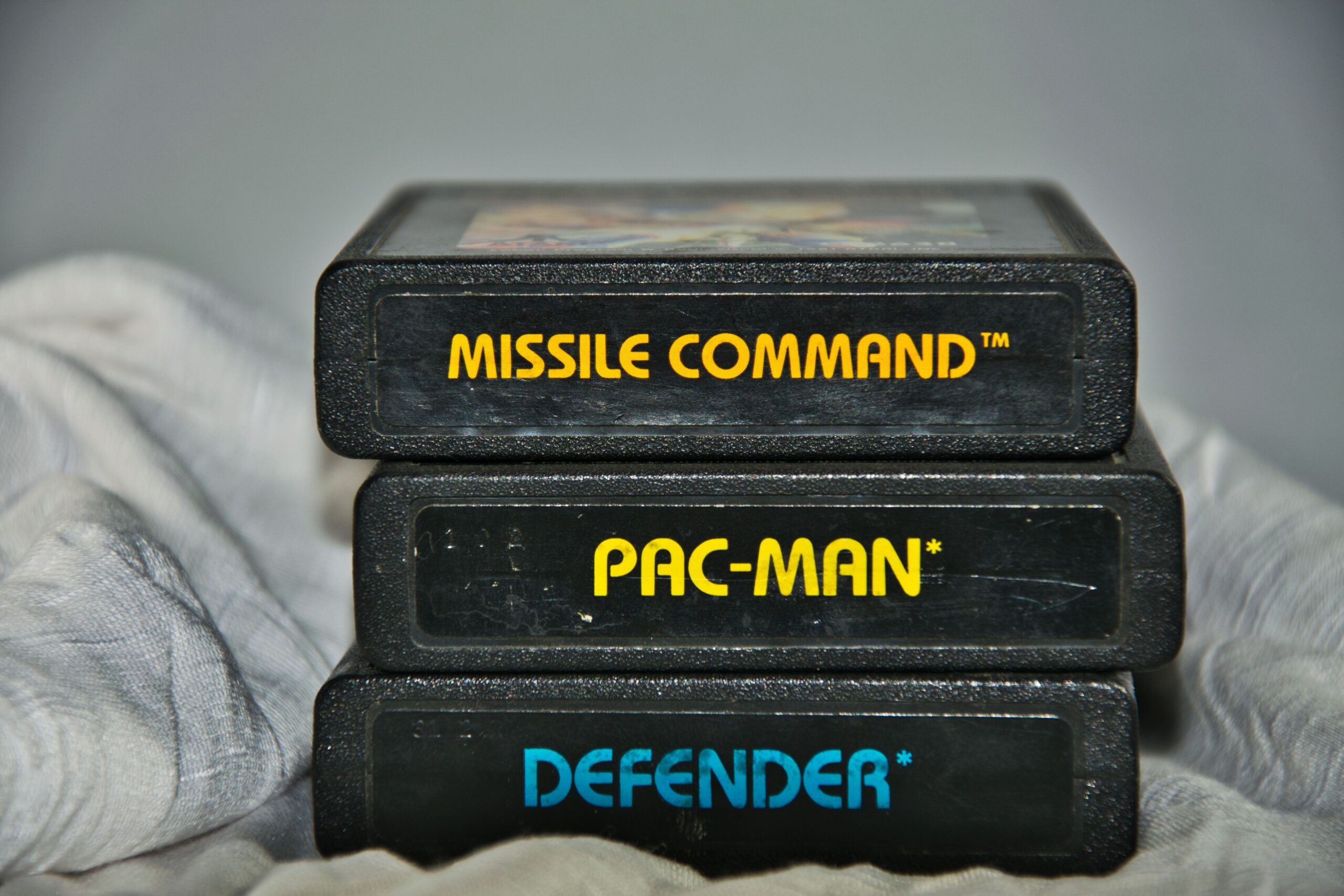

Every collector eventually asks the same question, standing in front of a shelf full of cartridges: how much is any of this actually worth? The honest answer is more complicated than the internet makes it look. Some retro games sell for thousands of euros, while others that people remember as expensive sit in bins for pocket change. This guide explains why some retro games are worth real money, which games are genuinely valuable in 2026, how to find out what your collection is worth without guessing, and the mistakes that cost collectors the most.
Why Some Retro Games Are Worth Money
A retro game is worth what someone will pay for it, and what people will pay depends on four forces that have stayed constant for thirty years. The first is rarity: a game that sold poorly in its time is rare now, and rarity is the foundation of every high price. The second is demand: games that people remember with real affection, or that appear in movies and shows, suddenly spike in price. The third is condition: a loose cartridge, a complete boxed game and a sealed copy of the same title can be worth completely different amounts. The fourth is nostalgia economics: the generation that grew up with these games is now old enough to pay real money for them, and that wave has driven prices steadily upward for two decades.
Understanding these four forces matters because it explains why some games are worth a fortune while others are not. A rare, beloved, complete-in-box RPG will always outperform a common cartridge of a forgotten sports title, no matter how old both are. Age alone is never enough.
The Most Valuable Retro Games Right Now
The market changes every year, but the hierarchy is remarkably stable. These are the games that consistently command the highest prices, with honest ballpark figures for complete-in-box copies. Treat the numbers as ranges, because condition changes everything.
| Game | System | Typical price (complete) | Why it is valuable |
|---|---|---|---|
| Little Samson | NES | €2,500–€4,000 | Rare late NES release with a cult following |
| EarthBound | SNES | €400–€800 | Beloved RPG, famously small print run outside Japan |
| {"text":"Chrono Trigger"} | SNES | €300–€600 | One of the greatest RPGs ever made, high demand |
| Panzer Dragoon Saga | Sega Saturn | €600–€1,200 | Legendary RPG with an absurdly short European release |
| Mega Man X3 | SNES | €300–€500 | Hard-to-find late SNES cart, always wanted |
| Conker’s Bad Fur Day | N64 | €150–€300 | N64’s most sought-after single-player cart |
| Silent Hill | PS1 | €200–€500 | Horror classic with a strong modern audience |
| Suikoden II | PS1 | €250–€700 | JRPG with a tiny European run and a huge fanbase |
| Resident Evil (Director’s Cut, longbox) | PS1 | €150–€400 | Collector edition, iconic packaging |
| Cubivore | GameCube | €300–€600 | Strange and rare GameCube game with a devoted following |
A few patterns jump out. RPGs dominate because their audiences stayed loyal and grew. Horror games are rising fast because of the modern horror renaissance. And European releases of RPGs consistently beat American ones in price, because print runs here were smaller. If you own any of these games, your shelf may be worth more than you thought.
How to Find Out What Your Games Are Worth
Guessing prices from memory is how people lose money, both when buying and when selling. The honest method has three steps. First, check PriceCharting, which aggregates sales across eBay and other marketplaces into a clear loose, complete and new price for each game. It is the closest thing to an official index the hobby has. Second, look at sold listings, not active listings, on eBay: active listings tell you what people are asking, sold listings tell you what people actually paid, and the difference is the entire game. Third, cross-reference condition carefully, because the same cartridge can be worth five times more complete-in-box than loose.
One warning applies to every source: prices are averages, not promises. A rare game is worth what a specific buyer pays on a specific day, and markets move. A game that spiked because a movie mentioned it can settle back down months later. Checking the same game across two or three sources, including recently sold items, is the only safe way to estimate.
Condition, Grading and the Honest Truth
Condition is the single biggest factor in value, and it works in clear tiers. A loose cartridge that plays fine is the cheapest way to own a game. A complete-in-box copy with the manual and inserts is typically worth two to five times more. A sealed copy is worth dramatically more again, and this is where the hobby splits into two honest camps.
Professional grading, through services like WATA and VGA, wraps sealed games in protective cases and assigns scores out of ten. Graded copies sell for a premium, sometimes a huge one. The honest advice from a historian who watches the market is this: grading only makes financial sense for genuinely rare sealed games, and the premium is real but the fees, the time and the unpredictability are also real. For the vast majority of collections, a clean complete-in-box game is a better purchase than a marginal graded one at a higher price.
The Mistakes That Cost Collectors the Most
After years of watching the market, these are the errors I see repeated most often. The first is paying for a label instead of a game: counterfeit cartridges and reproduction boxes are everywhere, and the price of rare games has made fakes profitable. Check the cartridge board, the label printing and the box print quality, and treat suspiciously cheap listings of valuable games as fakes until proven otherwise. The second mistake is treating active listings as the market price, which overvalues everything. The third is chasing trends: buying a game the day a show mentions it means buying at the peak. The fourth is ignoring storage: sunlight, humidity and poor shelves quietly destroy value that condition took years to build. And the fifth is the one that hurts people who grew up with these games most of all: never confuse the value of a game with its meaning to you, because the market does not care about your memories, and that is exactly why you should keep the games you love and only sell the ones you do not.
Regional Price Differences
One of the least understood facts about retro game values is that they change by region, and the differences are not small. The same game can cost twice as much in Europe as in the United States, or the opposite, depending on print runs and demand. European RPG releases are the classic example: publishers ordered far fewer copies of games like Suikoden II, Terranigma and Panzer Dragoon Saga for PAL markets, which made them dramatically scarcer and more expensive here. North America, by contrast, often has larger supplies of NES and SNES cartridges, which keeps prices of common titles lower. The practical lesson is to check the region of both the game and the price data before you buy or sell. A price from an American site is a starting point, never a number you can apply directly to a European copy, and the reverse is equally true. Serious collectors quickly learn to read three charts: one for their region, one for Japan and one for the US.
Hidden Gems Still Undervalued
The market has favorites, but it also has blind spots, and finding them is how patient collectors build value. Undervalued games tend to share three traits: they were excellent but sold modestly, they belong to genres with small but loyal audiences, and they have not yet had their moment in a documentary, a stream or a remake. Retro shooters and shmups are a perfect example: brilliant games that were never mainstream, whose prices have risen steadily but still lag the RPG giants. Obscure but beloved platformers on the Sega Saturn, racing games on the Dreamcast and overlooked Nintendo 64 titles all fit the same pattern. Nobody can promise which games will rise next, and the honest historian does not try to predict. But a good rule of thumb has held for years: a game that is genuinely excellent, genuinely rare and still affordable is rarely a bad thing to own, because the value of playing it is guaranteed even if the price never moves.
Where to Sell Your Retro Games
When the time comes to sell, the honest rule is that convenience and price are opposite ends of the same scale. Local retro game stores pay the least but are instant and safe. Online marketplaces like eBay reach the widest audience and the highest prices but charge fees and demand careful packaging and honest listings. Dedicated retro communities, forums and Facebook groups often strike the best balance for rare items, because buyers there know exactly what they are looking at. PriceCharting also runs a marketplace that is designed for the hobby. Whichever route you choose, take clear photos, describe every flaw honestly, and set a price from sold data, not from hope.
Frequently Asked Questions
Are all retro games valuable?
No. Most retro games are worth very little, and only a minority of titles are genuinely valuable. Rarity, demand and condition decide value, and common games in poor condition are nearly worthless no matter how old they are.
How do I know if my game is worth money?
Check PriceCharting for the game, then compare against recently sold listings on eBay. Compare the condition to the three tiers (loose, complete, sealed) and estimate honestly where your copy sits.
Are reproduction cartridges worth anything?
No. Reproductions and counterfeit cartridges are worth a fraction of the original and are often worthless as collectibles. They also damage the market when sold as originals, which is why checking for fakes matters.
Should I get my retro games graded?
Only for genuinely rare sealed games. For complete-in-box games and common titles, grading fees usually outweigh the premium, and a clean ungraded collection is a better investment for most people.
Will retro game prices keep rising?
Nobody can promise that. Prices have trended up for two decades, but they have also corrected before, and trend-chasing is the fastest way to overpay. Buy what you love and the value question stops mattering.
The Value of Playing
The honest final word is this: the retro game market is real, and some games in your collection may be worth far more than you paid. But the games worth the most are not always the ones worth the most to you. Check the prices, protect the rare titles, sell what you do not love, and keep playing what you do. That is the only valuation that never goes down.