
The Evolution of the Modern Retro Gaming Handheld
Over the past decade, portable retrogaming has transformed from a niche DIY experiment into a refined hardware industry. Enthusiasts who once gutted old enclosures to solder Raspberry Pi boards into crude shells now have access to precision-engineered devices tailored to vintage architectures. The modern retro gaming handheld market has matured along two distinct engineering philosophies: software emulation running on flexible mobile chipsets, and hardware simulation driven by Field-Programmable Gate Arrays. Each path solves the challenge of historical game preservation differently, catering to distinct expectations regarding fidelity, price, and ease of use.
While software-driven systems prioritize versatility and massive game libraries, hardware-level recreation through FPGA chips has raised the bar for absolute accuracy. Devices such as the Analogue Pocket use reprogrammable logic circuits to mirror the cycle-accurate behavior and near-zero input latency of vintage microprocessors rather than approximating them through code. This architectural leap eliminates the audio micro-stutter and frame-pacing irregularities that often plague budget emulators. As display technology advanced in tandem, handhelds began ditching mismatched aspect ratios in favor of custom panels that scale legacy 240p signals and square-pixel formats cleanly, honoring the mechanical soul of original portables without the display compromises of early mobile screens.
Upgrading Original Game Boy Hardware with IPS Kits and Flash Carts
For collectors who refuse to compromise on the tactility of authentic buttons and original silicon, hardware modification remains the gold standard. The classic Nintendo Game Boy and Game Boy Color were brilliant feats of engineering in their era, but their unlit reflective panels are notoriously brutal on modern eyes. Installing an aftermarket IPS kit completely revitalizes these machines, substituting aged liquid crystal with a bright, high-contrast panel boasting vivid color saturation and customizable brightness levels. The upgrade typically demands nothing more than moderate shell trimming and light soldering, turning a dusty garage-sale find into an ergonomic daily driver.
The second half of this hardware revival involves modern storage solutions. Loading a library onto an EverDrive or equivalent flash cart bypasses the need to transport delicate, escalating-value cartridges on daily commutes. Devices engineered by Krikzz utilize standard microSD cards to feed clean ROM files directly into the Game Boy’s physical memory bus, executing games exactly as Nintendo’s engineers intended. With built-in memory management that supports instant save states and clean access menus, a modified Game Boy delivers the ultimate hybrid experience: period-authentic sound generation and button travel paired with contemporary screen clarity and convenience.
Dedicated Emulation Handhelds Running RetroArch
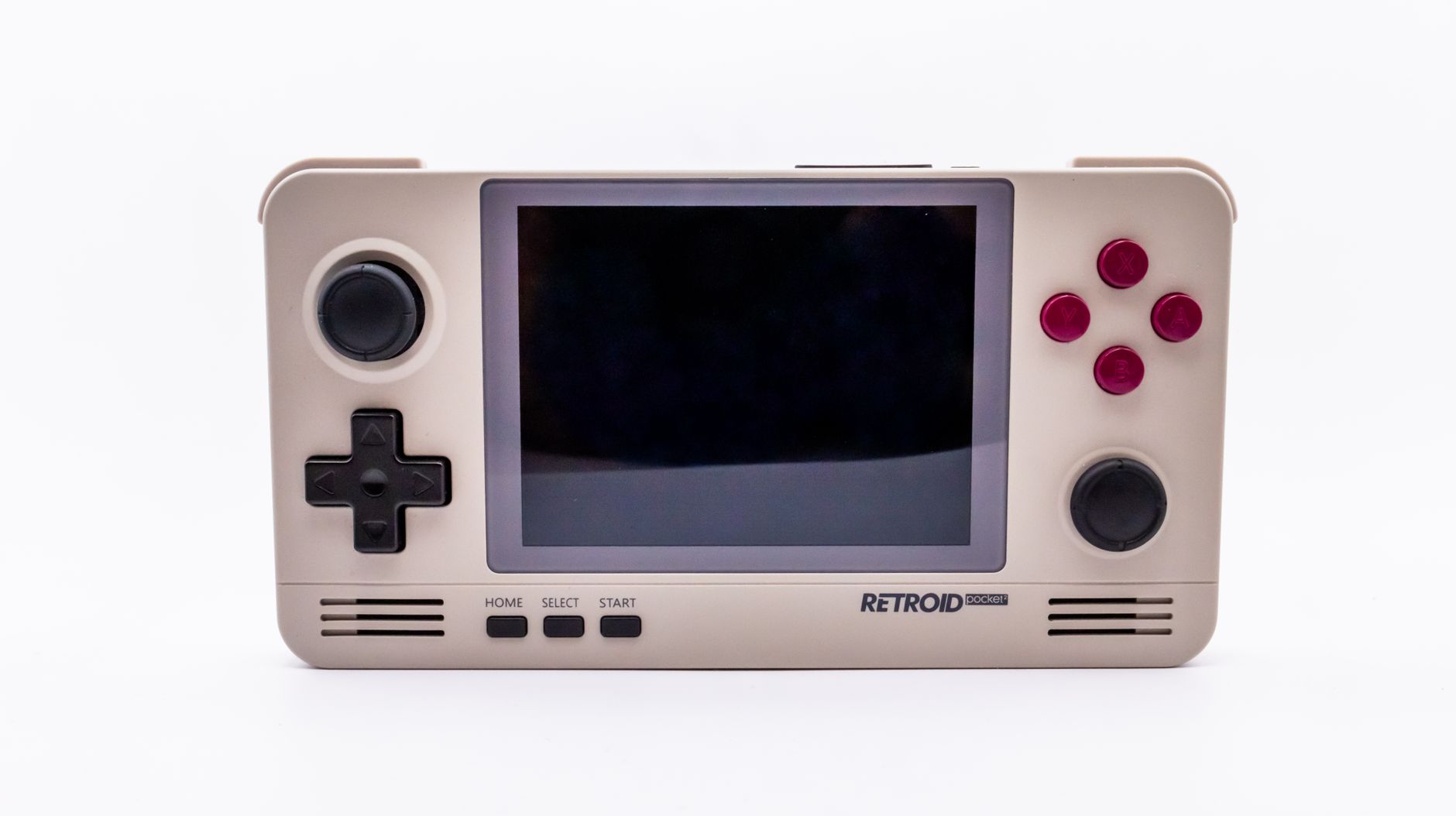
When sheer breadth of compatibility is the priority, dedicated emulation handhelds powered by Linux distributions or streamlined Android builds dominate the landscape. At the center of this ecosystem sits RetroArch, the modular open-source front end that links unified inputs and graphic outputs to individual libretro cores. Instead of toggling disparate apps with clashing configurations, players manage decades of gaming history under a unified directory. From 8-bit platformers to 32-bit disc classics, a well-tuned emulation handheld can handle multiple console generations while offering deep quality-of-life additions like game rewinding, run-ahead latency reduction, and synchronized save states.
Maximizing the performance of these handhelds requires an understanding of underlying system dependencies and visual tuning. Running complex platforms like the Sony PlayStation or Sega CD demands authentic BIOS dumps placed in proper system directories to avoid boot errors and timing glitches. Once the backend is properly configured, RetroArch’s advanced shader pipeline transforms flat modern LCDs into dynamic retro monitors, applying realistic scanline patterns and pixel-grid masks that recreate the aesthetic of vintage 240p displays. The result is a highly portable, versatile gaming hub that balances pocketable battery efficiency with the visual warmth of classic home gaming setups.
Software Emulation vs FPGA Handhelds: Accuracy and Latency
Choosing between software emulation and hardware simulation comes down to how you value micro-level timing versus sheer system flexibility. Software emulation on portable systems works by translating vintage processor instructions through an intermediate operating system layer. While modern ARM chips offer plenty of raw computational muscle, this translation layer inevitably introduces processing overhead. Even when running optimized libretro cores inside RetroArch, players often experience a baseline input lag of two to four frames, occasional frame drops, and minor audio de-synchronization. For fast-paced platformers or twitch-reaction arcade games, that slight disconnect between pressing a microswitch and seeing the action unfold on screen can disrupt muscle memory built over decades.
Hardware simulation powered by Field-Programmable Gate Arrays takes a completely distinct architectural path. Devices like the Analogue Pocket or portable MiSTer builds configure FPGA chips at the silicon level to mirror the electrical circuits and logic gates of original retro consoles. By calculating cycle-accurate instructions in parallel rather than serial code approximations, an FPGA handheld eliminates operating system bloat, delivering near-zero input latency and pristine audio synchronization. You sacrifice the ability to effortlessly run higher-end 3D systems from later generations, but for authentic 8-bit and 16-bit gameplay, hardware logic recreation remains the undisputed benchmark for timing fidelity.
Managing BIOS Files, Cores, and Save States on Portable Devices
A reliable emulation handheld requires thoughtful directory management, especially when advancing past rudimentary 8-bit platforms. Core-based environments like RetroArch depend on accurate system firmware to emulate timing quirks and system calls faithfully. While standard cartridges for systems like the SNES or Game Boy boot straight from ROM dumps, platforms like the Sony PlayStation, Sega CD, and portable machines like the PSP mandate authentic, cleanly dumped BIOS files placed in designated system folders. Omitting these files or using mismatched regional revisions results in crashed boot sequences, broken audio channels, or corrupt internal clock cycles that can ruin hours of gameplay.
Beyond basic boot requirements, mastering memory allocation defines a frustration-free portable setup. While an in-game save writes battery-backed data directly to simulated cartridge RAM at specific milestones, a save state acts as a complete snapshot of the system memory bus taken at an exact microsecond. Both dedicated emulation handhelds and premium flash carts like Krikzz’s EverDrive lineup give you the freedom to reload states instantly during unforgiving boss encounters. However, relying solely on save states carries risks during emulator core updates or configuration tweaks. The safest habit is maintaining clean subfolders on a vetted microSD card, allowing native in-game saves to handle primary campaign progress while keeping save states reserved for quick pause sessions on the go.
Key Buying Factors: Display Quality, Ergonomics, and Battery Life
When evaluating a retro handheld, the display panel dictates how authentic your visual experience will feel. Vintage home consoles and portables rendered games at progressive 240p resolutions or unique non-square pixel formats. Standard budget screens often employ uneven bilinear scaling that introduces distracting pixel shimmer during horizontal scrolling. Enthusiasts should look for displays with integer scaling capabilities or custom aspect ratios, such as the high-density panels found on modern FPGA units or premium IPS kit retrofits for classic Game Boy chassis. A bright IPS screen with authentic grid shaders or scanline filters faithfully mimics the scanline depth of an authentic CRT without washing out retro color palettes.
Chassis ergonomics and power efficiency make or break long-term usability. A sleek, ultra-slim vertical housing might look striking in photos, but cramped d-pad placement and flat shoulder triggers quickly induce hand fatigue during extended sessions of complex games. Consider button membrane stiffness, grip thickness, and whether your thumbs sit in a neutral resting position. Simultaneously, look past raw milliamp-hour ratings and examine real-world power draw. Software handhelds driving demanding 3D emulation or bright backlights can drain a battery pack in three hours, whereas an energy-conscious FPGA layout or a streamlined 2D handheld can easily provide six to eight hours of uninterrupted play on a single charge.