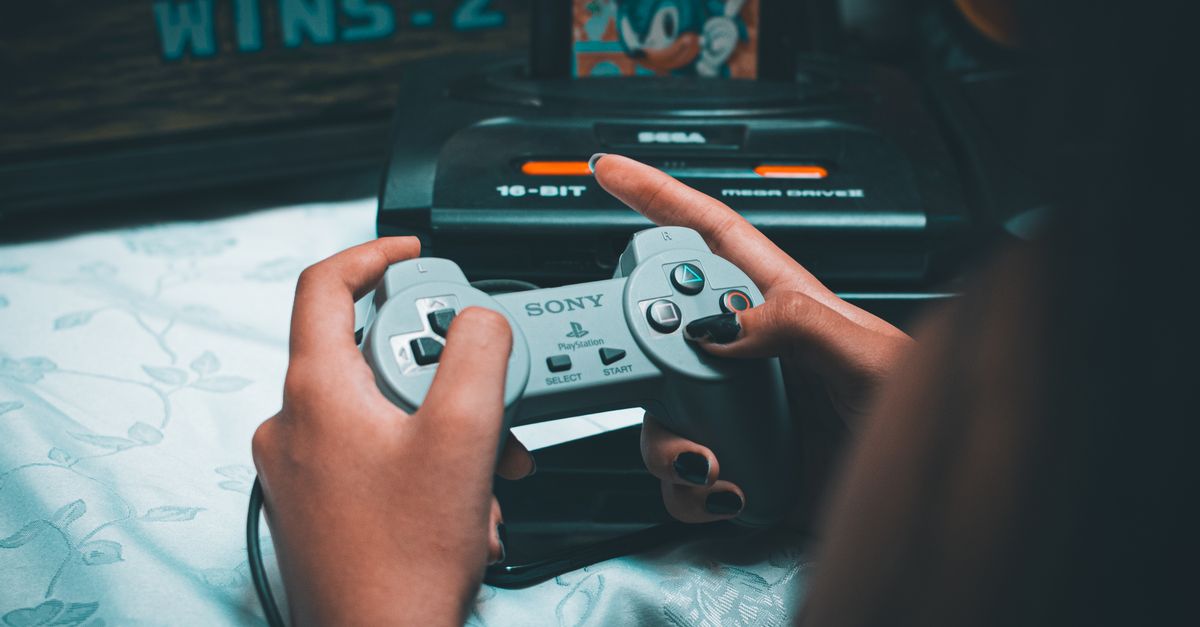

Retro gaming is not nostalgia for its own sake. It is the pursuit of a specific design philosophy: games built around tight mechanics, immediate pick-up-and-play joy, and hardware constraints that forced creativity rather than limiting it. This guide covers the golden run of home consoles from the Nintendo Entertainment System to the original PlayStation, roughly 1983 through 1995. Whether you were there the first time or you are discovering Super Mario Bros. and Final Fantasy VII decades later, this is the practical map to that era of hardware.
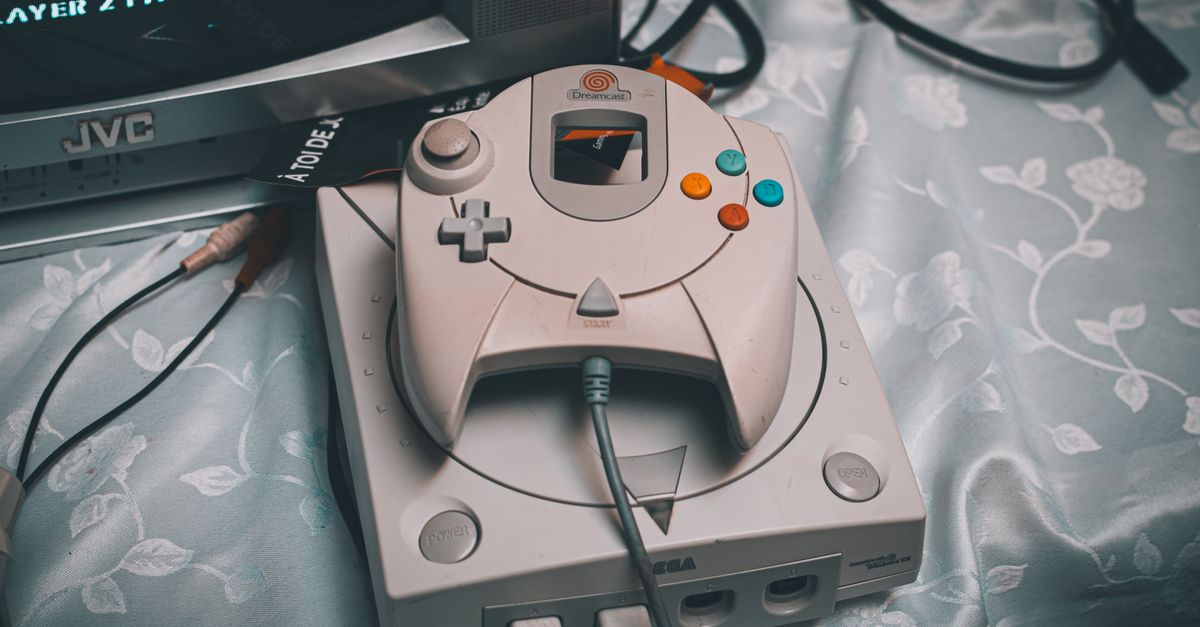
The 8-Bit Era
After the North American video game crash of 1983, the Nintendo Entertainment System single-handedly rebuilt the market. Its secret weapon was not raw power but control. Nintendo added a lockout chip so only licensed cartridges would run, mandated a seal of quality, and capped the number of games a publisher could release per year. That curation created an ecosystem where quality mattered. The NES ran on a Ricoh 2A03 processor derived from the 6502, with two dedicated picture processing units that let it move more sprites per scanline than almost anything else of its time.
The Sega Master System was the main alternative, especially strong in Europe and Brazil. Its hardware was superficially more powerful, with a Z80 CPU and more colour palette entries, but Sega never matched Nintendo’s library. The Atari 7800 offered backward compatibility with Atari 2600 games and little else of note. For most of the world, the 8-bit era was defined by Nintendo’s lock-in.
Iconic 8-bit games that still hold up include:
- Super Mario Bros. 3 — the pinnacle of NES platforming design.
- The Legend of Zelda — open-world exploration before the term existed.
- Metroid — non-linear progression and atmosphere via simple tiles and sound.
- Castlevania III: Dracula’s Curse — punishing difficulty and branching paths.
- Final Fantasy — the template for console RPGs.
The 16-Bit Era
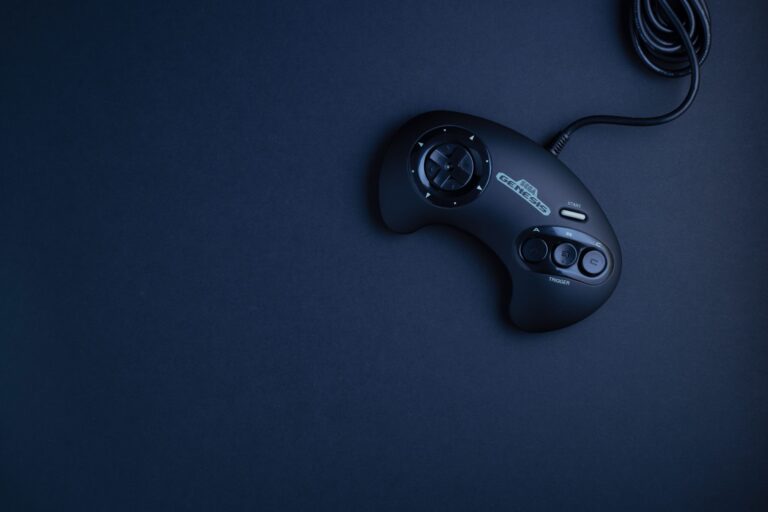
The jump from 8-bit to 16-bit was the most transformative generational leap in console history. In 1990, the Super Nintendo Entertainment System (SNES) and Sega Genesis squared off in the first true console war. The SNES used a 65816 with mode 7 graphics, enabling rotation and scaling effects that made titles like F-Zero possible. The Genesis ran a Motorola 68000 clocked at 7.6 MHz, roughly doubling the NES’s raw CPU speed and producing a loud, arcade-like sound profile courtesy of Yamaha FM synthesis.
The war was fought with mascots. Sonic the Hedgehog on the Genesis was a speedrun of attitude and blast processing. Super Mario World on the SNES was a masterclass in level design and hidden exits. Meanwhile, two smaller players had their moment. The TurboGrafx-16 (PC Engine in Japan) squeezed 16-bit visuals out of an 8-bit CPU and strong sprite hardware. The Neo Geo offered true arcade power at home with a price tag around $650, making it a luxury item then and now.
The 16-bit era also drove the golden age of the role-playing game. Enix, Squaresoft, and Konami pushed CD-length stories onto cartridges using battery-backed RAMs for save data. Chrono Trigger, Secret of Mana, and Final Fantasy VI remain benchmarks for the genre.
The CD Era
By 1994, cartridges were a bottleneck. A full-CG intro or an orchestral soundtrack could not fit in eight or sixteen megabytes. The next wave used compact discs. Sega rushed out the Sega CD (Mega-CD) add-on for the Genesis in 1992, then the 32X in 1994, fragmenting its audience. Neither took off, though the Sega CD version of Sonic CD is a genuine classic with its time-travel mechanics.
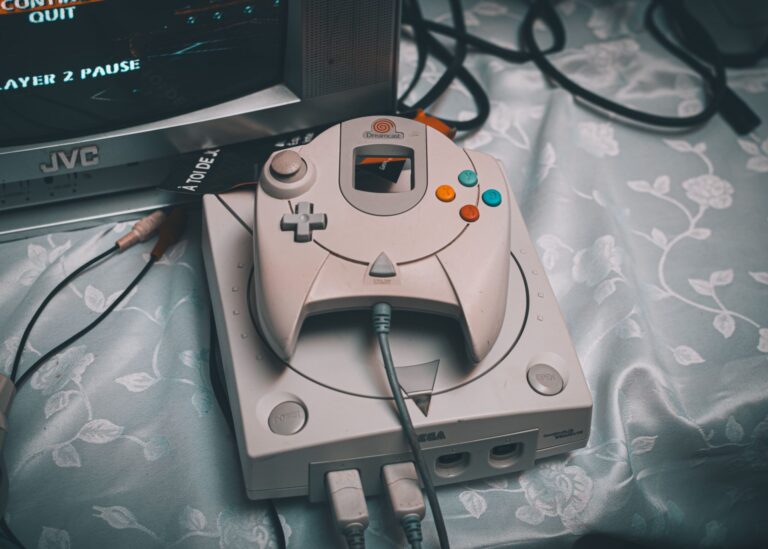
The real winners were Sony and, briefly, Panasonic. The 3DO was expensive and irrelevant. The Sega Saturn launched with a complex dual-CPU design that developers hated. Then came the Sony PlayStation in late 1994 in Japan and September 1995 in North America. Its strengths were practical: a cheap CD-ROM drive, a GPU specialised for polygons and texture mapping, and a development kit that used ordinary C code rather than arcane assembly. That accessibility brought in dozens of third-party studios, which in turn produced a library of astonishing depth.
While the NES and SNES dominated their eras, the CD era is more accurately the era of the PlayStation alone.
Key Consoles and Their Iconic Games
If you want to buy into this history rather than just read about it, here is the practical shortlist.
Nintendo Entertainment System (1983)
- Super Mario Bros. — the game that saved the industry.
- Mega Man 2 — tight boss design and one of the best OSTs of the decade.
- Contra — co-op run-and-gun perfection, if you have the reflexes.
Sega Genesis / Mega Drive (1988)
- Sonic the Hedgehog 2 — the Tails-assisted peak of momentum platforming.
- Streets of Rage 2 — the best beat-em-up outside arcades.
- Phantasy Star IV — a deep sci-fi RPG that rivals the best SNES fare.
Super Nintendo / Super Famicom (1990)
- The Legend of Zelda: A Link to the Past — the blueprint for modern Zelda.
- Super Metroid — atmospheric exploration that defined a whole sub-genre.
- Final Fantasy VI — operatic storytelling and a world-class score.
Sony PlayStation / PS1 (1994)
- Final Fantasy VII — the RPG that brought the mainstream to 3D.
- Metal Gear Solid — cinematic stealth that rewrote what console games could be.
- Castlevania: Symphony of the Night — the finest action-RPG of the generation.
- Gran Turismo — simulation racing with real car physics, not just arcade action.
Where to Buy
Original hardware is cheaper than you might fear if you are patient, but more expensive than you might hope if you want a complete boxed collection. Your best channels are, in rough order of preference:
- Local retro game stores — you can test the hardware before paying, and you support a community.
- Retro conventions and swap meets — haggling is expected, and you will find uncommon gems.
- eBay with careful due diligence — check seller photos for yellowing shells, broken cartridge pads, and missing RF shields. Ask for close-ups of the cartridge connector.
- Facebook Marketplace and Craigslist — great prices, but meet in public places and verify the console runs before handing over cash.
Three practical upgrades are worth their weight. First, replace old capacitors in power supplies before they leak. Second, use a modern scaler or an RGB mod so the video output actually looks good on a modern television. Third, buy flash carts such as EverDrive or SD2SNES if you want to play the entire library without crowding your shelves. Flash carts are legal to own, though downloading ROMs for titles you do not have physical copies of remains a grey area; most collectors still keep the originals on display.
Modern Alternatives
If you have no interest in soldering, CRT televisions, or hunting down cleaning kits, the modern landscape has excellent substitutes.
- Analogue consoles — Super NT and Mega SG use FPGA chips to reproduce original hardware behaviour at pixel-perfect quality over HDMI, without relying on software emulation.
- Nintendo Classic Mini series — NES and SNES Classics come preloaded with curated libraries and are trivial to use, though support has ended.
- MiSTer FPGA — a single affordable board that plays nearly every retro console, including PS1, with cycle-accurate cores. The closest thing to owning every console you have ever wanted in one box.
- Raspberry Pi with RetroPie — the budget option. It emulates almost everything from the NES to the PS1, and a full setup costs under $100.
- Official re-releases and remasters — Steam, GOG, and the Nintendo Switch Online catalogue include many of the classics legally and conveniently.
The key difference matters if you care about authenticity: FPGA hardware replicates the original chips so that timing quirks, audio glitches, and scrolling look exactly as they did in the 90s. Software emulation is close but not perfect. For most players, emulation is entirely fine. For purists and speedrunners, FPGA is worth the extra money.
Conclusion
Retro consoles remain relevant because their best games were designed to be finished, mastered, and revisited for decades. The NES taught us the language of game design, the Genesis taught us the value of speed, the SNES refined storytelling, and the PS1 proved that 3D gaming could carry genuine emotional weight. The hardware matters less than the games, and the games are more accessible today than at any point since their release. Whether you collect original carts, run a MiSTer, or just subscribe to Switch Online, these five generations of software will reward the time you invest in them.